




University of Birmingham vs University of Nottingham: Which is Better for International Students 2026?
— 10 min read read

CourseOptions Team
Quick Answer: Both Birmingham and Nottingham are prestigious Russell Group universities with similar rankings and fees (£20,000-£35,000). Birmingham offers a vibrant city experience and strong business programmes, while Nottingham provides a more compact student-friendly environment with excellent research facilities and global campuses.
Choosing between the University of Birmingham and University of Nottingham represents a decision between two of the UK's most respected Russell Group institutions. Both universities have built formidable reputations over more than a century, attracting international students from around the globe with their academic excellence and research prowess.
For international students in 2026, this choice often comes down to personal preferences regarding city life, academic specializations, and campus culture. While both institutions offer world-class education and similar fee structures, they provide distinctly different experiences that can significantly impact your university journey.
Quick Comparison Table
| Factor | University of Birmingham | University of Nottingham |
|---|---|---|
| Founded | 1900 | 1881 |
| QS World Ranking 2026 | Typically 80-100 | Usually 100-120 |
| Tuition Fees (2026) | £20,000-£35,000/year | £20,000-£32,000/year |
| Student Population | ~35,000 | ~33,000 |
| International Students | ~30% | ~35% |
| IELTS Requirement | Generally 6.0-7.0 | Typically 6.0-7.0 |
| Location Type | Major city centre | Student city |
| Notable Strengths | Business, Medicine, Engineering | Pharmacy, Veterinary, English |
⚠️ Data Disclaimer: Fees, rankings, and requirements shown are approximate and based on 2026 data. Always verify current information on official university websites before making decisions.
Rankings & Academic Reputation
University of Birmingham typically maintains a strong position in global rankings, usually placing within the top 80-100 in QS World University Rankings. The university has particular strength in subject areas like business and management, medicine, and engineering. Its Birmingham Business School holds triple accreditation (AACSB, AMBA, EQUIS), placing it among the elite business schools globally.
University of Nottingham generally ranks slightly lower in overall league tables, typically appearing in the 100-120 range for QS rankings. However, it excels in specific subject areas, particularly pharmacy and pharmacology (often ranked in the top 10 globally), veterinary medicine, and English literature. The university's research excellence is reflected in its strong performance in the Research Excellence Framework.
Both institutions are Russell Group members, ensuring high research standards and academic rigour. The ranking differences are marginal and shouldn't be the primary deciding factor for most students.
Tuition Fees & Living Costs
University of Birmingham tuition fees for international students typically range from £20,000-£35,000 per year in 2026-2027, with variation depending on the programme. Medicine and dentistry programmes tend to be at the higher end, while humanities subjects are generally more affordable. Living costs in Birmingham are moderate for a major UK city, with students typically spending £800-£1,200 per month on accommodation and living expenses.
University of Nottingham generally offers slightly more competitive fee structures, with international tuition ranging from £20,000-£32,000 annually. The cost of living in Nottingham is typically lower than Birmingham, with students often finding more affordable accommodation options. Monthly living expenses usually range from £700-£1,000, making it slightly more budget-friendly overall.
Both universities offer various scholarship opportunities specifically for international students, though availability and amounts vary by academic year and programme.
Entry Requirements
University of Birmingham typically requires international students to have strong academic credentials, with A-level equivalents usually ranging from AAB to A*AA depending on the programme. English language requirements generally fall between IELTS 6.0-7.0, with most programmes requiring 6.5 overall. Competitive programmes like medicine may have additional requirements including entrance exams and interviews.
University of Nottingham has similar entry standards, typically expecting A-level equivalents of ABB to A*AA. IELTS requirements usually range from 6.0-7.0, with most courses requiring 6.5. Some programmes, particularly in engineering and sciences, may have specific subject prerequisites that international students must meet through their previous qualifications.
Both universities consider a wide range of international qualifications and provide detailed equivalency information on their websites.
Location & Student Life
Birmingham offers the experience of studying in the UK's second-largest city, providing extensive cultural opportunities, nightlife, and career prospects. The city's diversity means international students often find established communities from their home countries. The campus is integrated into the city centre, offering easy access to shopping, restaurants, and entertainment venues. Transport links are excellent, with direct connections to London and other major UK cities.
Nottingham provides a more traditional university town experience, where students make up a significant portion of the population. This creates a vibrant student atmosphere throughout the city. The main campus (University Park) is located on the outskirts, offering a more peaceful, green environment for studying. Nottingham city centre is easily accessible and offers good entertainment and shopping options, though on a smaller scale than Birmingham.
Both cities offer rich sporting cultures, with Birmingham having professional football teams and Nottingham being famous for its association with Robin Hood and having strong sporting facilities.
Courses & Academic Specializations
University of Birmingham is particularly renowned for its business programmes, with Birmingham Business School being one of the few triple-accredited schools globally. The university also excels in medicine, dentistry, engineering, and social sciences. Recent investments in facilities have strengthened programmes in computer science and artificial intelligence. Students can browse available courses to explore the full range of options.
University of Nottingham has exceptional strength in pharmacy and pharmacology, consistently ranking among the world's best. The university is also renowned for veterinary medicine, English literature, geography, and engineering. Its unique feature includes international campuses in Malaysia and China, offering opportunities for student exchanges and global perspectives.
Both universities offer comprehensive ranges of undergraduate and postgraduate programmes, with strong research opportunities across disciplines.
Graduate Outcomes & Career Prospects
University of Birmingham graduates typically enjoy strong employment prospects, with graduate employment rates usually exceeding 85% within six months of graduation. The university's location in a major business centre provides excellent internship and graduate job opportunities. Starting salaries for Birmingham graduates typically range from £22,000-£35,000, varying significantly by discipline.
University of Nottingham also maintains strong graduate employment rates, usually around 80-85%. The university's careers service is well-regarded, and the alumni network is particularly strong in certain sectors. Graduate starting salaries are generally comparable to Birmingham, ranging from £20,000-£33,000, with variation based on field of study and location of employment.
Both universities have strong industry connections and active careers services supporting international students with visa guidance and job search support.
Campus & Facilities
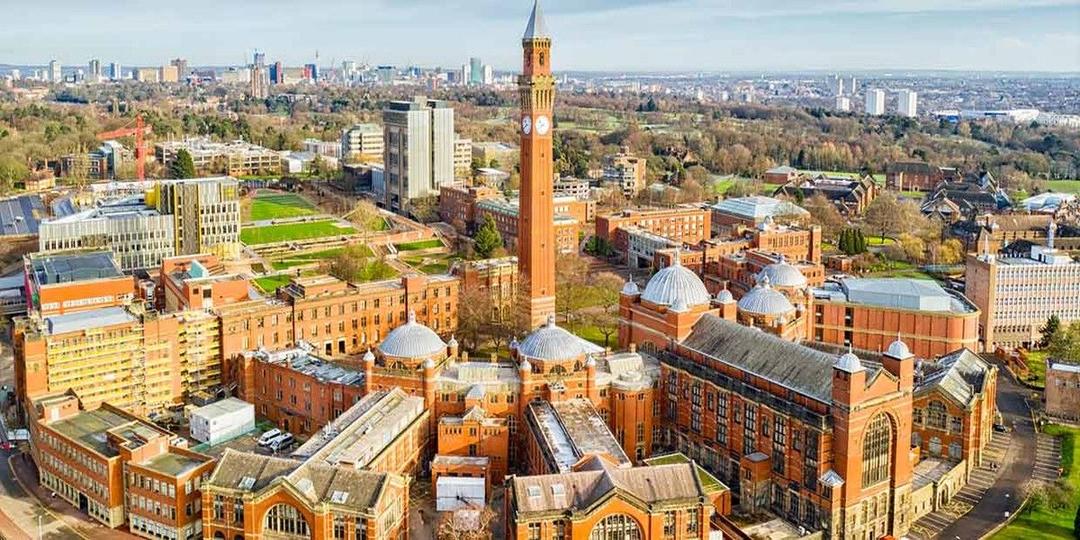
University of Birmingham features a mix of historic red-brick buildings and modern facilities spread across the Edgbaston campus. Recent investments include state-of-the-art sports facilities, a new library, and modern teaching spaces. The campus is well-integrated with the city, offering easy access to amenities while maintaining a distinct university atmosphere.
University of Nottingham's University Park campus is often considered one of the UK's most beautiful, featuring extensive green spaces and a lake. The campus won awards for its environmental sustainability initiatives. Facilities include modern lecture halls, well-equipped laboratories, and excellent sports facilities. The Jubilee Campus houses the business school and features innovative, environmentally friendly architecture.
University of Birmingham - Pros & Cons
Pros: ✅ Major city location with extensive opportunities, ✅ Triple-accredited business school, ✅ Strong industry connections, ✅ Excellent transport links, ✅ Diverse international community, ✅ Comprehensive range of programmes
Cons: ❌ Higher living costs than smaller cities, ❌ More competitive environment, ❌ Less traditional university town atmosphere, ❌ Can feel impersonal due to size
University of Nottingham - Pros & Cons
Pros: ✅ Beautiful campus environment, ✅ Strong student community atmosphere, ✅ Lower cost of living, ✅ Excellent specific subject rankings, ✅ International campus opportunities, ✅ Award-winning sustainability initiatives
Cons: ❌ Fewer career opportunities in immediate vicinity, ❌ Less diverse city environment, ❌ Limited nightlife compared to major cities, ❌ May feel isolated for some international students
Which One is Right for You?
Choose University of Birmingham if you:
- Prefer the energy and opportunities of a major city
- Are interested in business, finance, or entrepreneurship
- Want extensive internship and job opportunities nearby
- Enjoy diverse cultural experiences and communities
- Value excellent transport connections for travel
Choose University of Nottingham if you:
- Prefer a traditional university town experience
- Are interested in pharmacy, veterinary science, or English literature
- Want a close-knit student community atmosphere
- Prefer lower living costs and a more affordable lifestyle
- Value environmental sustainability and green campus spaces
- Are interested in global campus exchange opportunities
Conclusion
Both the University of Birmingham and University of Nottingham offer excellent educational opportunities for international students, with their Russell Group status ensuring high academic standards. Your choice should ultimately depend on your personal preferences for city versus town life, specific academic interests, and budget considerations. Visit both campuses if possible to get a feel for the environment that suits you best, and remember that success at either institution depends more on your engagement and effort than the specific university choice.
Key Statistics
📊 Both universities are Russell Group members with similar tuition ranges (£20,000-£35,000)
📊 Birmingham typically ranks 80-100 globally, Nottingham usually 100-120
📊 International students make up 30% at Birmingham, 35% at Nottingham
📊 Graduate employment rates exceed 80% at both universities within 6 months
Frequently Asked Questions
Which university is better for international students - Birmingham or Nottingham?
Both are excellent Russell Group universities with strong international student support. Birmingham offers a major city experience with more career opportunities, while Nottingham provides a traditional university town atmosphere with lower living costs. The choice depends on your preferences for city life, specific subjects, and budget.
Are tuition fees higher at Birmingham or Nottingham in 2026?
Birmingham's fees typically range from £20,000-£35,000 annually, while Nottingham's range from £20,000-£32,000. Birmingham tends to be slightly more expensive, particularly for professional programmes like medicine and business. However, living costs in Birmingham are also higher, making Nottingham generally more affordable overall.
Which university has better graduate employment prospects?
Both universities maintain strong graduate employment rates (80-85%+ within 6 months). Birmingham may have slight advantages due to its location in a major business centre with more local opportunities. However, both have excellent careers services and strong alumni networks that support international graduates.
What are the main differences in campus life between Birmingham and Nottingham?
Birmingham offers an urban campus integrated with city life, providing extensive cultural and social opportunities but potentially feeling less intimate. Nottingham features a beautiful, award-winning campus with strong student community atmosphere and green spaces, but fewer off-campus entertainment options.
Which university is better for specific subjects like business or sciences?
Birmingham excels in business (triple-accredited business school), medicine, and engineering. Nottingham is world-renowned for pharmacy and pharmacology, veterinary medicine, and English literature. Both offer strong programmes across most disciplines, so specific subject rankings should guide your decision.
How do entry requirements compare between Birmingham and Nottingham?
Both universities have similar entry requirements, typically requiring A-level equivalents of ABB to A*AA and IELTS 6.0-7.0 (usually 6.5). Requirements vary by programme, with competitive courses like medicine requiring higher grades and additional assessments at both institutions.
Key Takeaways
✅ Both are prestigious Russell Group universities with similar academic standards and fees
✅ Birmingham offers major city advantages while Nottingham provides traditional university town experience
✅ Birmingham excels in business and medicine; Nottingham leads in pharmacy and veterinary science
✅ Total costs tend to be lower at Nottingham due to reduced living expenses despite similar tuition