




University of Birmingham vs University of Leeds: Which is Better for International Students 2026?
— 9 min read read

CourseOptions Team
Quick Answer: Both University of Birmingham and University of Leeds are prestigious Russell Group institutions offering excellent education for international students. Birmingham typically ranks slightly higher globally and excels in business and engineering, while Leeds is renowned for communications, textiles, and offers a more vibrant student nightlife scene.
Choosing between the University of Birmingham and University of Leeds is a common dilemma for international students applying to UK universities. Both institutions are members of the prestigious Russell Group, offering world-class education with strong research credentials and excellent graduate prospects.
While both universities share similar academic excellence, they each have distinct personalities, strengths, and student experiences. Birmingham, England's second-largest city, offers urban sophistication and cultural diversity, while Leeds provides a dynamic student-focused atmosphere with renowned nightlife and a thriving creative scene.
| Factor | University of Birmingham | University of Leeds |
|---|---|---|
| Global Ranking (QS 2026) | ~80-90 | ~90-100 |
| Annual Tuition Fees | £22,000-£28,000 | £21,000-£27,000 |
| Entry Requirements | AAA-ABB / IELTS 6.5-7.0 | AAA-ABB / IELTS 6.5-7.0 |
| Student Population | ~35,000 | ~38,000 |
| International Students | ~30% | ~25% |
| Notable Strengths | Business, Engineering, Medicine | Communications, Textiles, Psychology |
| Campus Type | Single campus | Multiple campuses |
| City Cost of Living | Moderate-High | Moderate |
⚠️ Data Disclaimer: Fees, rankings, and requirements shown are approximate and based on 2026 data. Always verify current information on official university websites before making decisions.
Rankings & Academic Reputation
University of Birmingham generally maintains a slight edge in global university rankings, typically appearing in the top 80-90 of QS World University Rankings. The university has a particularly strong reputation for research, ranking highly in the Research Excellence Framework (REF). Birmingham is especially renowned for its business school, which holds triple accreditation (AACSB, EQUIS, AMBA), and its engineering programs consistently rank among the UK's best.
University of Leeds usually positions itself in the top 90-100 globally, with exceptional performance in specific subject areas. Leeds School of Business also holds triple accreditation, while the university leads in communications and media studies, consistently ranking in the global top 20 for these subjects. The university's textile design and psychology programs are also internationally recognized.
Both institutions perform strongly in national rankings, typically appearing in the UK's top 20 universities, making the ranking difference relatively minimal for most practical purposes.
Tuition Fees & Living Costs
Birmingham international tuition fees typically range from £22,000-£28,000 per year for 2026-2027, with laboratory-based and clinical programs at the higher end. Living costs in Birmingham are generally moderate to high, with accommodation ranging from £5,000-£9,000 annually and total living expenses around £10,000-£13,000 per year.
Leeds offers slightly more affordable tuition, generally ranging from £21,000-£27,000 annually for international students. Living costs in Leeds tend to be more budget-friendly, with accommodation typically costing £4,500-£8,000 per year and overall living expenses around £9,000-£12,000 annually.
Both universities offer payment plans and have similar policies regarding deposits and fee structures. Leeds may offer a slight financial advantage, particularly for students on tighter budgets.
Entry Requirements
Both universities have comparable entry requirements, typically requiring AAA-ABB at A-level (or international equivalent) depending on the program. Popular courses like Medicine, Dentistry, and Engineering usually require AAA grades.
English Language Requirements: Both institutions typically require IELTS 6.5-7.0 overall, with minimum band scores varying by program. Birmingham tends to be slightly more flexible with alternative English qualifications, while Leeds offers extensive pre-sessional English programs.
Application Process: Both use UCAS for undergraduate applications, with similar deadlines and requirements. Graduate applications are processed directly through university portals, with comparable processing times.
Location & Student Experience
Birmingham is the UK's second-largest city, offering extensive cultural attractions, shopping, and dining options. The city has excellent transport links, including direct trains to London in 90 minutes. Birmingham's diverse population creates a multicultural environment that many international students find welcoming. However, the larger city can feel less intimate, and some areas around campus require careful navigation.
Leeds is known for having one of the UK's best student scenes, with exceptional nightlife, music venues, and student-friendly attractions. The city center is compact and walkable, creating a strong sense of community. Leeds has a younger demographic and more affordable entertainment options. The surrounding Yorkshire Dales offer beautiful countryside for outdoor activities.
Both cities offer part-time work opportunities, though Birmingham's larger economy may provide more diverse options.
Academic Strengths & Course Offerings
University of Birmingham excels in:
- Business and Management (highly ranked MBA program)
- Engineering and Technology
- Medicine and Health Sciences
- Psychology and Social Sciences
- Computer Science
University of Leeds is particularly strong in:
- Communications and Media Studies (global top 20)
- Textile Design and Fashion
- Psychology
- Earth and Environmental Sciences
- Languages and Linguistics
Both universities offer comprehensive course catalogs with over 200 undergraduate programs each. Birmingham tends to have stronger professional programs (law, business, medicine), while Leeds excels in creative and social sciences.
Graduate Outcomes & Career Support
Both universities report strong graduate employment rates, typically 85-90% of graduates in employment or further study within 15 months.
Birmingham graduates often command slightly higher starting salaries, particularly from business and engineering programs, with median graduate salaries ranging £24,000-£28,000. The university has strong alumni networks in London's financial sector.
Leeds graduates also achieve excellent outcomes, with median salaries typically £22,000-£26,000. The university has particularly strong connections in media, creative industries, and northern England's business sector.
Both institutions offer comprehensive career services, including job fairs, networking events, and placement programs.
Scholarships & Financial Support
University of Birmingham offers various scholarships for international students:
- Global Masters Scholarships (up to £2,000-£10,000)
- Country-specific scholarships
- Merit-based awards for exceptional academic performance
University of Leeds provides:
- Excellence Scholarships (up to £5,000)
- Regional scholarships for specific countries
- Sports and academic achievement awards
Both universities offer financial counseling and emergency funding support. Leeds may have slightly more generous scholarship offerings for certain regions.
Campus & Facilities
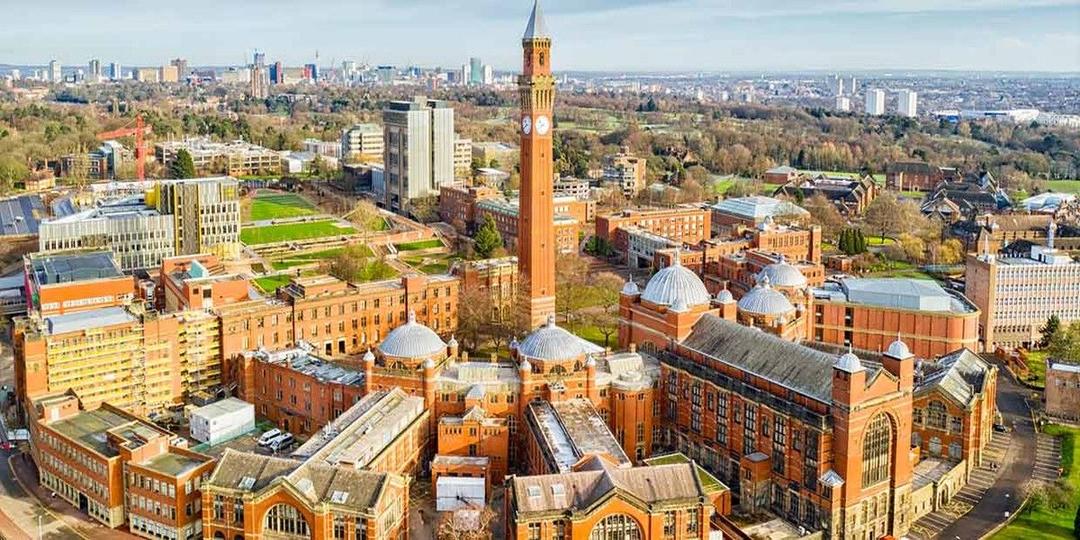
Birmingham features a compact, traditional campus with Gothic Revival architecture, including the iconic Chamberlain Clock Tower. Facilities include modern laboratories, a comprehensive library system, extensive sports facilities, and the Barber Institute of Fine Arts. The campus feels cohesive and walkable.
Leeds operates across multiple sites, with the main campus featuring a mix of historic and ultra-modern buildings. Notable facilities include the award-winning Brotherton Library, state-of-the-art engineering buildings, and excellent sports facilities. The distributed campus layout offers variety but may feel less unified.
Both universities provide excellent student accommodation, dining options, and recreational facilities.
University of Birmingham - Pros & Cons
Pros: ✅ Higher global rankings, ✅ Strong business and engineering programs, ✅ Excellent London connections, ✅ Diverse city environment, ✅ Compact campus, ✅ Strong alumni network Cons: ❌ Higher living costs, ❌ Less vibrant student nightlife, ❌ More expensive city overall, ❌ Can feel impersonal in large city
University of Leeds - Pros & Cons
Pros: ✅ Vibrant student life and nightlife, ✅ Lower cost of living, ✅ Strong creative and media programs, ✅ Excellent student satisfaction, ✅ Beautiful surrounding countryside, ✅ More affordable entertainment Cons: ❌ Slightly lower global rankings, ❌ Distributed campus layout, ❌ Weather can be challenging, ❌ Fewer international business connections
Which One is Right for You?
Choose University of Birmingham if you:
- Prioritize higher global rankings and prestige
- Want to study business, engineering, or medicine
- Prefer urban sophistication and cultural diversity
- Value proximity to London and international business hubs
- Don't mind higher living costs for city amenities
Choose University of Leeds if you:
- Want an authentic UK student experience with vibrant social life
- Are interested in creative subjects, communications, or psychology
- Prefer a more budget-friendly lifestyle
- Value strong community feel and student satisfaction
- Enjoy access to natural beauty and outdoor activities
For most international students, both universities offer excellent education and outcomes. Your choice should depend on your academic interests, budget constraints, and preferred lifestyle. Consider visiting both campuses or attending virtual information sessions to get a feel for each institution's culture.
Conclusion
Both the University of Birmingham and University of Leeds represent excellent choices for international students seeking world-class education in the UK. While Birmingham may edge ahead in global rankings and business reputation, Leeds offers exceptional value, student satisfaction, and specialized programs in creative fields.
Ultimately, your decision should align with your academic goals, financial situation, and personal preferences for city life versus student-focused community. Both institutions will provide you with the skills, networks, and experiences needed for successful international careers.
To explore more options and compare with other institutions, you can explore all UK universities and find the perfect match for your educational journey.
Key Statistics
📊 Birmingham ranks ~80-90 globally vs Leeds at ~90-100 in QS Rankings 2026
📊 Leeds offers slightly lower tuition fees (£21,000-£27,000 vs £22,000-£28,000)
📊 Birmingham has higher international student percentage (30% vs 25%)
📊 Both universities maintain 85-90% graduate employment rates within 15 months
Frequently Asked Questions
Which university has better global recognition - Birmingham or Leeds?
University of Birmingham typically ranks slightly higher in global rankings (~80-90 vs ~90-100 in QS 2026) and may have stronger international recognition, particularly in business and engineering fields. However, both are prestigious Russell Group universities with excellent reputations worldwide.
Is Leeds or Birmingham more affordable for international students?
Leeds is generally more affordable, with tuition fees ranging £21,000-£27,000 compared to Birmingham's £22,000-£28,000. Living costs in Leeds are also lower, with accommodation and daily expenses typically £1,000-£2,000 less per year than Birmingham.
Which university offers better student life and social opportunities?
Leeds is widely regarded as having superior student life, with vibrant nightlife, music venues, and student-focused social scene. Birmingham offers more cultural diversity and urban sophistication but may feel less intimate. Leeds consistently scores higher in student satisfaction surveys.
What are the key academic differences between Birmingham and Leeds?
Birmingham excels in business (triple-accredited business school), engineering, and medicine, with stronger research rankings. Leeds specializes in communications (global top 20), textiles, psychology, and creative subjects. Both offer comprehensive course selections with similar entry requirements.
Which city provides better career opportunities for international graduates?
Birmingham offers stronger connections to London's financial sector and international business, with slightly higher graduate salaries (£24,000-£28,000 vs £22,000-£26,000). Leeds excels in media, creative industries, and northern England business networks. Both maintain 85-90% graduate employment rates.
How do scholarship opportunities compare between the two universities?
Both universities offer merit-based and country-specific scholarships. Birmingham provides Global Masters Scholarships up to £10,000, while Leeds offers Excellence Scholarships up to £5,000. Leeds may have more generous regional scholarship programs for certain countries. Always check current offerings on official websites.
Key Takeaways
✅ Both are prestigious Russell Group universities with excellent international reputations
✅ Birmingham ranks slightly higher globally but Leeds offers better value for money
✅ Leeds provides superior student life experience while Birmingham offers urban sophistication
✅ Academic strengths differ: Birmingham (business/engineering) vs Leeds (creative/communications)